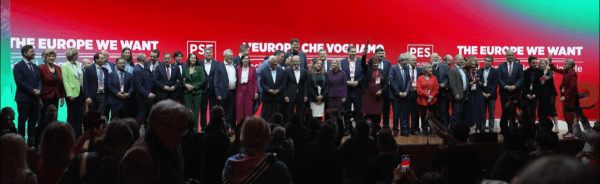
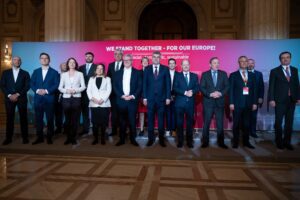
The 2024 PES Election Congress took place on 2 March, in Rome.
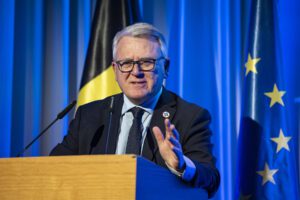
The PES Election Congress elected Nicolas Schmit as our common candidate and adopted the PES manifesto for the EU elections of this June.
The Party of European Socialists
We bring together the Socialist, Social Democratic and Labour Parties of the European Union and shape progressive policies.
Our membersPolicies
Opportunities for all, a sustainable economy, social justice and strong democracies – a fairer Europe. Find out how we can achieve it.
What we fight for
Documents & publications
Check out the latest publications from PES networks and working groups or find organisational documents.
Visit our documents sections
View our publications
Let’s stay in touch
Subscribe to ‘Red Alert’, the PES newsletter, and receive monthly updates on our activities. Stay informed of what the PES does for a better Europe.
Subscribe now

2024 PES Election Congress
Latest news
More news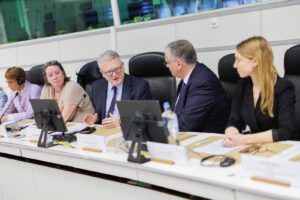



Upcoming
More eventsWhat we fight for
Europe needs to overcome inequality, fight for tax justice, tackle the
threat of climate change, harness the digital revolution, ensure a fair
agricultural transformation, manage migration better.
threat of climate change, harness the digital revolution, ensure a fair
agricultural transformation, manage migration better.
-
Employment, Social Affairs & Health
In our electoral programme, we said it loud and clear: our top priority is that Europeans, women and men, must have a decent job that allows good quality of life. We fight for a Europe that leaves no-one behind. Through education, training and social programmes when needed, everyone should be given a chance at a good life. More about Employment, Social Affairs & Health![Home]()
-
Energy & Environment
The PES stands for a sustainable, energy-efficient and environmentally aware Europe. We stand for an ambitious European Green Deal: the EU must be at the forefront of protecting nature and its resources and the fight against pollution and climate change.
More about Energy, Environment & Climate Change![Home]()
-
Economy & Finance
We believe that the economy must always serve society, and not the other way round. Throughout the 2008 financial crisis, and the 2019 coronavirus pandemic, we’ve been fighting for investment in jobs, growth-inducing sectors and people – and in particular youth – as a crucial element to bring about a sustainable economic recovery. The fight is far from over, but we’ve managed to bring about a shift in European policy, bringing the EU slowly back on track. More about Economy & Finance![Home]()
-
Youth & Education
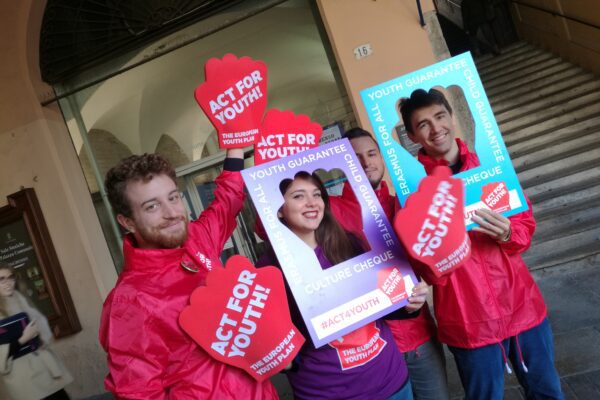
Together with its partners, the PES has launched a major campaign to put young people’s issues at the top of the EU agenda: UpToYouth. This campaign builds on the PES European Youth Plan, which focused on improving the prospects of young people across Europe. We want action on young people’s priorities: climate change, tackling youth unemployment, access to quality education, healthcare for all, and decent housing. More about Youth & Education![Home]()
-
Equality
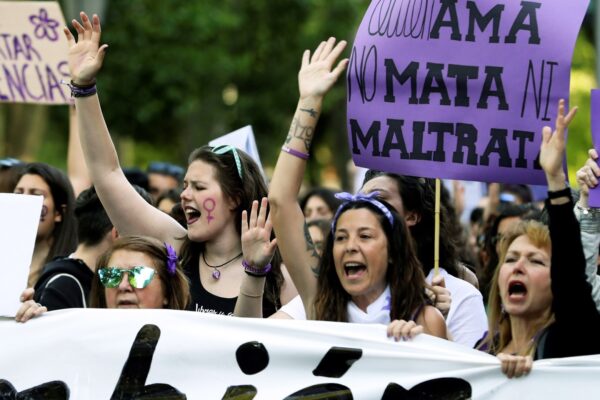
We are a feminist party, which fights for equal rights and opportunities for all women, men and non-binary people. Gender equality and LGBTI rights are crucial for well-functioning democracies, and any form of discrimination is unacceptable in our modern European societies. More about Equality![Home]()
-
Democracy & Human Rights
Enhancing European democracy is one of our main priorities. We want to engage the public and policy makers around three main pillars: fundamental rights, accountability, and participation. More about Democracy & Human Rights![Home]()
-
Future of Europe
Europe’s future belongs to all of us. That’s why it must work for everyone, reflecting the needs and aspirations of all our citizens. A Europe that works for the people. We are fighting for a resilient European Union, with stronger institutions that are better connected with citizens. We want an EU which meets future challenges and delivers the more social and sustainable Europe citizens want. More about Future of Europe![v]()
-
International Affairs & Cooperation
The PES is working for a better world. Europe has a major role to play on the international scene and must show its commitment to a just, democratic, peaceful and sustainable world. The PES works with progressive international partners to support this vision in Europe, its neighbourhood, and beyond. More about International Affairs & Cooperation![Home]()
-
Security & Justice
The security and safety of all citizens in Europe is a key priority. Together with our Justice and Home Affairs Ministers, representatives from our parties and partners, we’re pushing for an agenda that prioritises the security of all citizens hand in hand with social and integration policies, always with full respect of individual and collective rights. More about Security & Justice![Home]()





Our members and governments
33
Full member parties
13
Associated members
16
Observer members
9
Prime Ministers
10
In government
36
In opposition









































Prime Ministers
In Government
In opposition
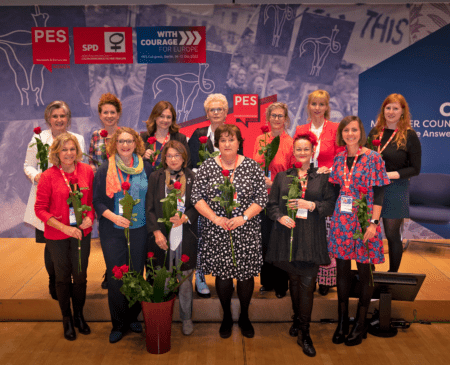
PES Women promoting gender equality and women’s rights
PES Women is the women’s organisation of the Party of European Socialists (PES) promoting gender equality and women’s rights both inside and outside the party.
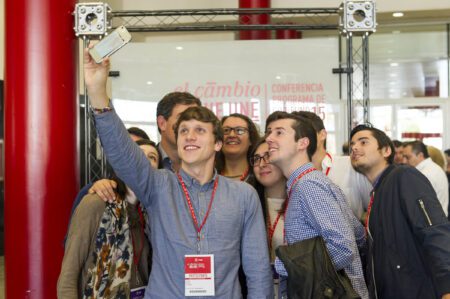
PES activists fight for a fairer Europe
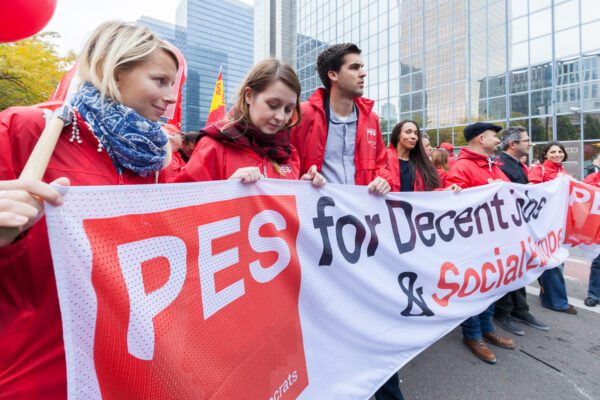
PES Activists are the grassroots of the socialist and social democratic family.
Socials

Party of European Socialists
151,465
We are the Party of European Socialists. We work for a Europe with more economic justice, sustainability, non-discrimination and equality between women and men.

🌹Today is #WorldBookDay!![]()
![]() We hope that you have had the time to trade book recommendations and roses with colleagues, friends and loved ones.
We hope that you have had the time to trade book recommendations and roses with colleagues, friends and loved ones.![]()
![]() We are glad to contribute also to that exchange with our list of Progressive Books, in a global and European context where political activism, compassion and understanding are needed.
We are glad to contribute also to that exchange with our list of Progressive Books, in a global and European context where political activism, compassion and understanding are needed.
⌛️ Time is running out and we cannot afford a pause. ![]() 🌍 On Earth Day we reiterate our commitment to reduce our footprint and to preserve our planet. Together with our common candidate Nicolas Schmit we stand for a Green and Social Deal to tackle climate change, while leaving no-one behind.
🌍 On Earth Day we reiterate our commitment to reduce our footprint and to preserve our planet. Together with our common candidate Nicolas Schmit we stand for a Green and Social Deal to tackle climate change, while leaving no-one behind.
🌹🇪🇺 🇲🇰 Today we are in #Skopje to support our friends from СДСМ – Социјалдемократски сојуз на Македонија for the upcoming elections and to extend our support for the European future of the country. PES president Stefan Löfven said: “While others have no plan, I believe that you – Dimitar Kovacevski , Stevo Pendarovski, the Social Democrats and their partners – have a clear plan to bring North Macedonia into the European Union. You have our full support.”